Why 78% of ‘Near Me’ Searches Convert to Offline Purchases (And How to Capture Them)
Introduction: The Local Search Revolution
Did you know that 78% of ‘near me’ searches result in an offline purchase within 24 hours? This staggering statistic from Google’s research reveals one of the most untapped opportunities in digital marketing today. Yet, most local businesses remain invisible in these critical moments when potential customers are actively searching for their services.
If you’re not optimizing for local search, you’re leaving significant revenue on the table. This is where Google Maps optimization and local SEO become not just marketing strategies, but business necessities.
In this comprehensive guide, we’ll explore why location-based searches convert at such exceptional rates, why Google Maps optimization is critical for your business, and most importantly, how you can capture these high-intent customers before your competitors do.
What Are ‘Near Me’ Searches and Why They Matter
Understanding the ‘Near Me’ Search Phenomenon
“Near me” searches represent some of the highest-intent queries on the internet. When someone types “plumber near me,” “best coffee near me,” or “dental offices near me,” they’re not browsing—they’re ready to take action.
These location-based searches have exploded in popularity over the past five years, with mobile devices driving the majority of traffic. According to recent data:
- 76% of people who search for something nearby on their smartphone visit a related business within 24 hours
- 28% of searches related to “near me” result in a purchase
- Mobile local searches grow 50% faster than desktop searches
The key insight? These aren’t hypothetical searches. These are people actively seeking solutions in their immediate vicinity, wallet ready.
The Mobile Local Search Boom
The rise of mobile devices has fundamentally changed how customers discover businesses. Unlike desktop searches where users might compare dozens of options, mobile users typically make decisions quickly:
- They search for a service
- They check Google Maps for options
- They call or visit the nearest business
This rapid decision-making process means that being visible in Google Maps is literally the difference between making a sale and losing it to a competitor.
The Data: Why 78% of ‘Near Me’ Searches Convert
Breaking Down the Conversion Stats
The 78% conversion rate (when we say “convert” here, we mean an offline action like a visit or purchase) comes from Google’s own research and has been validated by countless local SEO agencies. Here’s what the data tells us:
Search Intent Clarity: “Near me” searches represent explicit, immediate intent. The user has already decided they want the product or service—they’re just locating the nearest provider.
Time Sensitivity: Most “near me” searches happen when someone needs something right now. This urgency drives higher conversion rates than typical searches.
Mobile Dominance: Over 80% of “near me” searches happen on mobile devices, where users are already out and about, making purchases more likely.
Comparing Conversion Rates Across Search Types
Let’s put this in perspective:
- “Near me” searches: 78% conversion rate (offline action)
- “Best [service] in [city]”: 45-50% conversion rate
- Brand name searches: 60-65% conversion rate
- General informational searches: 5-15% conversion rate
The dramatic difference illustrates why local SEO should be a priority for any business with a physical location or service area.
Why Google Maps Optimization Is Critical for Local SEO
The Gateway to Local Discovery
Google Maps isn’t just a side feature—it’s become the primary tool for local business discovery. When users search on Google, the first thing they see are Google Maps results with local businesses, reviews, and directions.
Here’s the breakdown of what appears in Google search results for local queries:
- Google Maps Pack (top 3 businesses with map preview)
- Google Ads (paid local search ads)
- Organic listings (traditional website results)
- Google Local Services Ads
The Google Maps Pack is prime real estate, and businesses in the top 3 positions receive approximately 70% of all clicks from that search result.
Key Google Maps Ranking Factors
Getting your business to rank in the Google Maps top 3 requires optimization across multiple factors:
NAP Consistency: Name, Address, and Phone number must be identical across all platforms
Business Category Selection: Choosing the right primary and secondary categories improves relevance
Review Quantity and Recency: More recent, higher-quality reviews signal active, trustworthy businesses
Google Business Profile Completeness: A complete profile with photos, videos, and business hours ranks better
Local Citation Building: Mentions of your business on reputable local directories strengthen authority
Service Area Coverage: Defining your service area helps Google understand your local relevance
The Impact: How Local Search Drives Real Business Results
Measuring the ROI of Local Search Visibility
Consider a local service business like a plumbing company in Austin, Texas. Here’s how capturing “near me” search traffic impacts the bottom line:
Scenario 1: Invisible in Google Maps
- Monthly searches for “plumber near me Austin”: ~1,200
- Visibility: 0%
- Monthly conversions: 0
- Revenue impact: $0
Scenario 2: Ranking in Google Maps Top 3
- Monthly searches for “plumber near me Austin”: ~1,200
- Visibility: 70% of searches see your business
- Traffic to business: ~840 clicks
- Conversion rate (typical for service businesses): 15-20%
- Monthly conversions: 126-168 jobs
- Average job value: $500
- Monthly revenue impact: $63,000-$84,000
This isn’t theoretical. These are results we see regularly at MapsBoost when businesses implement proper local SEO strategies.
Beyond the Numbers: Long-Term Business Value
The immediate revenue impact is just the beginning. Capturing “near me” searches also provides:
Sustainable Growth: Unlike paid ads, Google Maps rankings provide long-term visibility without continuous ad spend
High-Quality Leads: Users searching “near me” are pre-qualified and ready to buy
Competitive Advantage: Most local businesses neglect Google Maps, meaning less competition in these high-intent searches
Positive Review Generation: More customers visiting your business means more opportunities for positive reviews, which further improve rankings
How to Capture These High-Converting ‘Near Me’ Searches
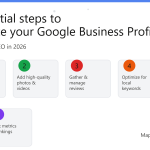
Step 1: Optimize Your Google Business Profile
Your Google Business Profile is the foundation of local search visibility. Ensure you:
- Complete every section of your profile
- Add high-quality photos and videos
- Include accurate business hours and service areas
- Write a compelling business description with relevant keywords
Pro tip: Update your profile regularly with posts and new photos—activity signals boost rankings.
Step 2: Generate and Manage Reviews Strategically
Reviews are a critical ranking factor and a trust signal for potential customers. Aim to:
- Request reviews from happy customers through email or text
- Respond to all reviews (positive and negative)
- Address negative reviews professionally and promptly
- Maintain at least a 4.5+ star rating
Step 3: Build Local Citations and Backlinks
Local citations (mentions of your business name, address, and phone number on directories) strengthen local authority. Focus on:
- Major directories: Yelp, Apple Maps, Facebook
- Industry-specific directories
- Local chamber of commerce listings
- High-authority local websites
Step 4: Implement Local SEO on Your Website
Your website should support your local search strategy with:
- Location-specific landing pages
- Schema markup for local business information
- Mobile optimization
- Fast loading times
- Local content and blog posts
Step 5: Monitor and Measure Performance
Use Google Search Console and Google Business Profile insights to track:
- Search terms bringing users to your profile
- Click-through rates to your website or call button
- Phone calls generated from your listing
- Website visits from Google Maps
The MapsBoost Advantage: Professional Local SEO
While these strategies are achievable independently, professional local SEO services accelerate results dramatically. At MapsBoost, we specialize in:
- Complete Google Business Profile optimization
- Strategic review generation and management
- Local citation building on 50+ directories
- Local content strategy and optimization
- Competitive analysis and ranking tracking
Our clients typically see ranking improvements within 30 days and substantial revenue increases within 90 days.
Conclusion: Don’t Miss Out on High-Converting Local Searches
The data is clear: “near me” searches convert at exceptional rates because they represent customers actively seeking your services. By optimizing your Google Maps presence and implementing a comprehensive local SEO strategy, you position your business directly in front of these high-intent customers.
78% conversion potential is waiting. The question is: will you capture it?
Start by conducting a complete audit of your Google Business Profile. If you need professional guidance, MapsBoost specialists are ready to help you dominate local search and convert more of these valuable customers.
Ready to capture your local search market? Contact MapsBoost today for a free local SEO consultation.
FAQs
Q: How long does it take to rank in Google Maps top 3? A: With proper optimization, most businesses see rankings within 30-90 days. Some competitive markets may take longer.
Q: Do I need a website for Google Maps optimization? A: While a website isn’t required, it significantly improves your overall local SEO performance and conversion rates.
Q: How many reviews do I need to rank well? A: Quality matters more than quantity. 20-30 recent reviews typically give you a competitive advantage, but consistency is key.
Q: Can I optimize Google Maps myself? A: Yes, but professional optimization yields faster and more comprehensive results, especially in competitive markets.
Q: What’s the difference between Google Maps optimization and local SEO? A: Google Maps optimization is one component of a comprehensive local SEO strategy that also includes your website, citations, and content.